
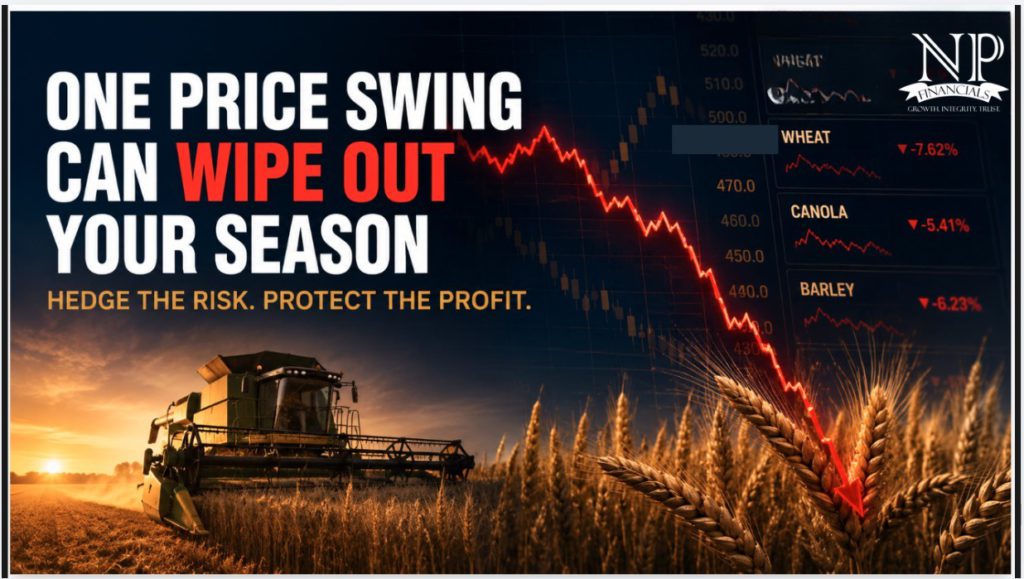
Commodity trading is one of the most popular ways to buy and sell assets in financial markets, but for agribusinesses it serves a more practical purpose than speculation. Farmers, food processors, and traders all face the same problem: agricultural prices can move sharply between planting and harvest, and those moves can determine whether a season ends in profit or loss. The commodity market exists to manage that uncertainty. It trades in the primary economic sector rather than manufactured products, and that sector includes agricultural products such as wheat, sugar, and oilseeds. Understanding how this market works is essential for anyone involved in modern agriculture or commodity trading.
What Is a Commodity Market?
A commodity market is where raw or primary commodities are bought and sold. Unlike manufactured products, these goods are largely standardised, which means one tonne of a specified grade of wheat is essentially interchangeable with another. That standardisation makes it possible to trade these products on organised exchanges, and it is what allows commodity trading to function as a viable business.
The business of commodity trading is extremely complex. It draws together producers who need to sell, consumers who need to buy, and traders who provide liquidity and take on risk. Commodity markets deal in a wide range of products, from metals like aluminium to energy and agricultural commodities.
Spot Markets Versus Futures Markets
Commodities are either for immediate delivery in spot trading or for conveyance later when traded as futures. This distinction is central to how agricultural risk is managed.
Spot markets involve the physical transfer of goods between buyers and sellers. When a bulk grain handler buys wheat from a farmer at the silo and pays the prevailing cash price, that transaction happens in the spot market. The commodity changes hands, often within days, and both parties have certainty about price and delivery.
Futures and forward markets work differently. These are agreements to exchange a commodity at a specified price on a future date. No physical product changes hands when the contract is signed. Instead, the contract can be settled in cash or through physical delivery later. Futures markets are where commodity traders spend most of their time, because these contracts allow participants to lock in prices months in advance. A wheat farmer can sell futures to protect the value of a crop that has not yet been harvested. A flour miller can buy futures to secure the cost of wheat for the coming year. Both are hedging agricultural risk, and both rely on the same commodity trading mechanisms.
How Agricultural Commodity Trading Works
Agricultural commodity trading is not limited to farmers and millers. Financial participants, including proprietary trading firms, hedge funds, and individual traders, also take positions in these markets. Their participation adds liquidity, which makes it easier for producers and consumers to enter and exit contracts at fair prices.
One of the most recognisable examples of an agricultural futures market is the Chicago Board of Trade, where corn futures have been traded for generations. Prices discovered in these exchanges become reference points for cash markets around the world. When an Australian grain farmer wants to understand the value of their crop, they look to international futures prices and adjust for local freight, quality, and currency factors.
For most Australian participants, direct physical trading of grain or livestock is impractical. Instead, they access commodity markets through financial instruments. There are several common approaches. One is directly buying and selling physical commodities, which suits large commercial operations with storage and logistics capacity. Another is owning stocks of companies that produce or sell commodities, such as listed agricultural businesses. A third is buying exchange-traded funds that track commodity prices. Each approach offers different exposure, cost, and complexity.
Hedging Agricultural Risk: The Core of Commodity Trading
Hedging is the practice of taking a position in the futures market that offsets an existing risk in the physical market. For an agribusiness, this is the heart of commodity trading. Consider a cotton grower who expects to harvest in six months. If prices fall before harvest, the grower earns less for the same cotton. By selling cotton futures today, the grower fixes a price now. If the cash price falls, the futures position gains value, offsetting the lower harvest revenue. If the cash price rises, the futures position loses value, but the crop is worth more. Either way, the financial outcome is more predictable.
Modern commodity trading firms take this idea further. Alongside price hedging, they provide capital and financing, risk management, market access, and physical execution and logistics solutions across power, gas, emissions, and other commodity markets. That means a modern commodity desk is not merely placing bets on direction. It is structuring transactions that help producers and consumers smooth out volatility across the entire supply chain.
Commodity CFD Trading for Australian Traders
For Australian traders, contracts for difference, or CFDs, have become one of the most accessible ways to participate in commodity markets. CFD trading allows a trader to speculate on the price of raw physical assets such as gold, silver, oil, wheat, and sugar without taking physical delivery of the underlying product.
Providers in Australia offer access to more than 100 commodities, including gold, silver, iron, copper, and agricultural products, often with tighter spreads and no rollovers. Traders can also trade global markets around the clock. Because commodity prices react to overnight moves and global market shifts, around-the-clock access lets traders respond to events as they happen. CFD platforms typically cover indices, forex, commodities, options, shares, and crypto, giving traders a single place to manage diversified exposure.
It is important to remember that CFDs are complex instruments that come with a high risk of losing money rapidly due to leverage. Leverage amplifies both gains and losses, so risk management discipline is essential. Every trader who uses CFDs should understand how margin works, how positions are valued, and how volatility can affect an account before committing capital.
Managing Volatility as a Modern Commodity Trader
Volatility is not an obstacle to be eliminated; it is a feature of commodity markets that must be managed. From our perspective at N P Financials, a proprietary trading firm and trader education company in Australia, the traders who succeed over the long term treat risk management as seriously as trade selection.
We have trained more than 33,000 individuals globally since 2013, and the lessons we repeat most often are consistent. Position sizing matters. Stop losses matter. Understanding the fundamentals of the specific commodity matters. A trader who understands seasonal supply patterns, weather, and export policies is better placed than one who simply watches a price chart.
Our one-on-one courses and mentorship programs teach students to trade across forex, shares, indices, commodities, intraday, and cryptocurrency markets. For commodity trading specifically, we focus on how futures and CFD markets relate to physical supply and demand. Students learn to read price action, build trading plans, and apply the same risk management principles used by professional trading desks. Whether a student intends to hedge an agricultural business or trade commodities as a standalone market, the underlying discipline is the same.
Practical Advice for Agribusinesses Considering a Hedge
If you operate an agribusiness, the first step is to define exactly what you are trying to protect. A wheat farmer faces a different risk profile from a cattle feedlot operator or a grain exporter. The farmer wants to protect the sale price of an upcoming crop. The feedlot wants to protect the cost of feed grain. Each requires a different hedge, and each requires care around contract specifications and timing.
It is also worth reviewing both physical and financial hedging routes. Some businesses prefer to negotiate forward contracts directly with buyers or sellers. Others use
exchange-traded futures. Others use CFDs for flexibility. The right choice depends on the size of the exposure, the business’s tolerance for risk, and the administrative capacity to manage margin calls and contract rollovers. Because commodity trading is complex, professional advice and structured education are valuable investments before substantial capital is committed.
Why Commodity Trading Still Matters
Commodity trading remains one of the most active areas of financial markets because the underlying demand is permanent. People need food, energy, and building materials regardless of economic conditions. That permanence creates real supply and demand dynamics that traders can analyse and act upon.
For Australian agribusinesses, the ability to hedge agricultural risk through commodity markets is not a luxury; it is a competitive necessity. Global commodity prices move daily, and businesses that ignore those moves are taking unmanaged positions by default.
Engaging with commodity trading, whether through futures, CFDs, or physical contracts, turns that hidden risk into an explicit, manageable decision.
At N P Financials, we see commodity trading as a discipline that can be learned. Our courses, mentoring programs, and trade ideas are designed to help traders understand how markets work, how to manage risk, and how to build consistent habits. If you would like to learn more about trading commodities or any other asset class, contact us on +61 3 9790 9476 or at [email protected]. Our team is based at Level 3, 2 Brandon Park Drive, Wheelers Hill, Victoria 3150, Australia, and we welcome enquiries from beginners and experienced traders alike.
Frequently Asked Questions
What is commodity trading?
Commodity trading is the buying and selling of raw physical assets such as gold, silver, oil, wheat, sugar, and other products from the primary economic sector. It happens in spot markets, where goods are delivered immediately, and in futures and forward markets, where
contracts are settled at a later date. Traders participate directly, through company shares, ETFs, or CFDs.
What is the difference between spot and futures trading?
Spot trading involves the physical transfer of goods between buyers and sellers, usually for immediate delivery. Futures and forward markets involve contracts to convey a commodity at a specified price on a future date. Futures are the primary tool for hedging because they allow producers and consumers to lock in prices in advance.
How do Australian traders trade commodities?
Australian traders can buy and sell physical commodities through commercial arrangements, own shares in companies that produce or sell commodities, buy exchange-traded funds, or trade commodity CFDs. CFD platforms provide access to more than 100 commodities, including gold, silver, iron, copper, wheat, and sugar, with trading available around the clock.
Are commodity CFDs risky?
Commodity CFDs are complex instruments and come with a high risk of losing money rapidly due to leverage. Leverage amplifies gains and losses, so traders should fully understand margin requirements and use strict risk management. Education and mentorship can help traders develop the discipline needed to manage these risks effectively.